

IgG N-glycan library (unlabelled)
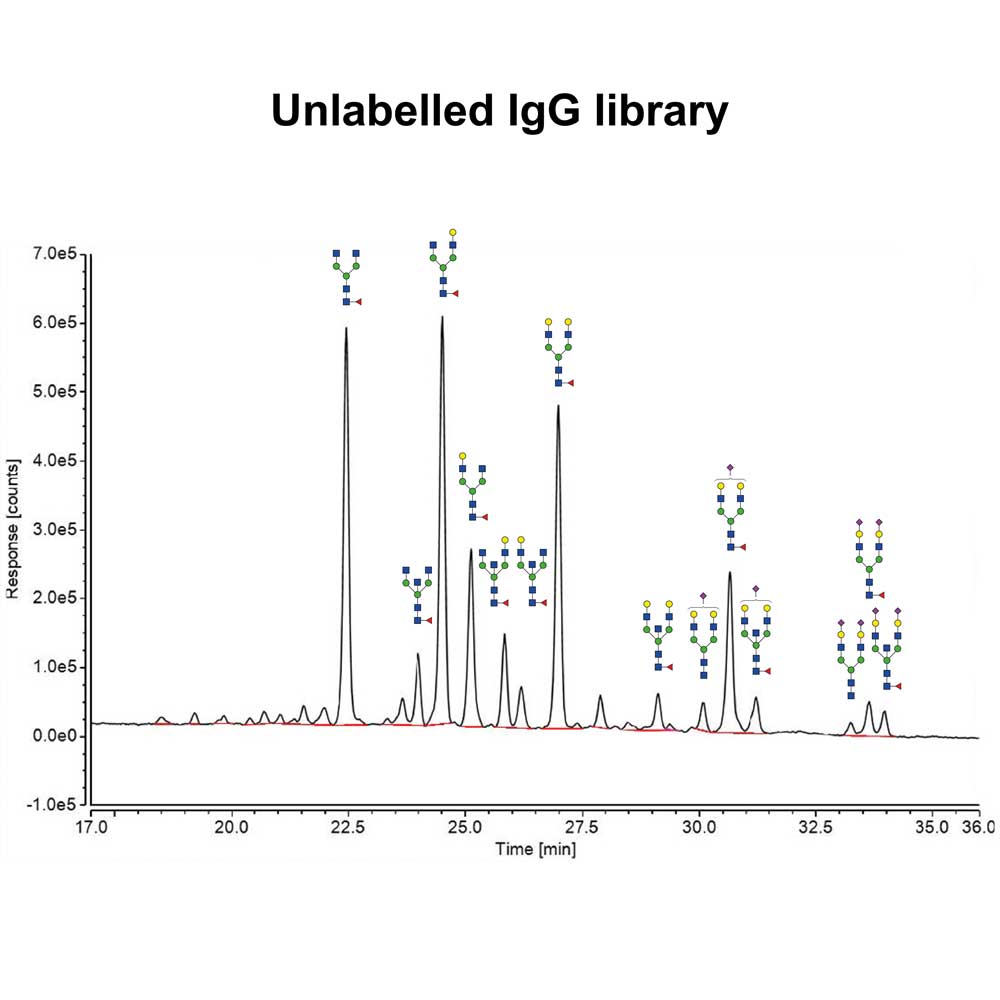
IgG N-glycan library (unlabelled)
- Product Code: CLIBN-IGG-01
- Size 25 μg
- £269
References
Beyer B, Schuster M, Jungbauer A, Lingg N. Microheterogeneity of Recombinant Antibodies: Analytics and Functional Impact. Biotechnol J. 2018 Jan;13(1). doi: 10.1002/biot.201700476. Epub 2017 Sep 25. Review.
Sha S, Agarabi C, Brorson K, Lee DY, Yoon S. N-Glycosylation Design and Control of Therapeutic Monoclonal Antibodies. Trends Biotechnol. 2016 Oct;34(10):835-846. doi: 10.1016/j.tibtech.2016.02.013. Epub 2016 Mar 22. Review
Liu L. Antibody glycosylation and its impact on the pharmacokinetics and pharmacodynamics of monoclonal antibodies and Fc-fusion proteins. J Pharm Sci. 2015 Jun;104(6):1866-1884. doi: 10.1002/jps.24444. Epub 2015 Apr 14.
Jefferis R. Recombinant antibody therapeutics: the impact of glycosylation on mechanisms of action. Trends Pharmacol Sci. 2009 Jul;30(7):356-62. doi: 10.1016/j.tips.2009.04.007. Epub 2009 Jun 22. Review.
Jefferis R. Glycosylation of recombinant antibody therapeutics. Biotechnol Prog 21: pp11-16, 2005
Fernandes D. Demonstrating Comparability of Antibody Glycosylation during Biomanufacturing. European Biopharmaceutical Review. Summer 2005. pp 106 -110
IgG N-glycan library, unlabelled, 25 μg
A mixture of fucosylated, bi-antennary glycan standards with variable sialylation released from human IgG antibody glycoprotein. A library of N-glycans released from purified human IgG antibody containing the following, bi-antennary N-glycans: 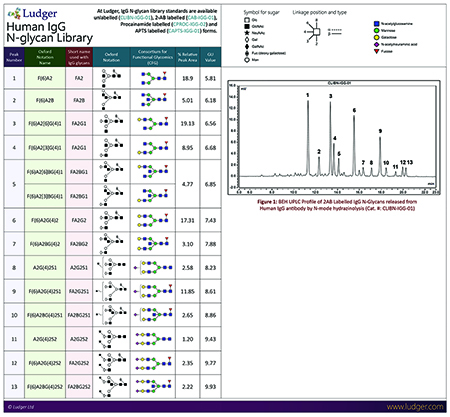
 SDS
SDSProduct specifications
Our IgG glycan library is a mixture of nonfucosylated and fucosylated, bi-antennary glycan standards with variable sialylation released from human IgG antibody glycoprotein. They are available unlabelled and labelled with a variety of tags.
The CLIBN-IGG-01 is an unlabelled glycan standard. The HPLC
and MS data in the CofA for this standard are produced by fluorescently
labelling the IgG N-glycans. This standard is used as a positive control within
glycan analysis workflows by fluorescently labelling it with the label of your
choice. For example: 2-aminobenzamide (2AB) or procainamide (PROC).
After labelling, a post-labelling cleanup should be performed to remove salts and excess dye. This results in an aqueous solution of labelled IgG N-glycans that can be analysed on LC/MS.
We also supply an IgG glycoprotein standard for use during glycan release and labelling.
“Glycosylation can significantly affect the in vivo safety and efficacy profiles of therapeutic recombinant monoclonal antibodies (rMAbs). In particular, glycans can have a marked influence on IgG Fc effector functions and changes in antibody glycosylation are a major cause of batch-to-batch variability during production. For these reasons, it is essential to measure and control antibody glycosylation accurately and reliably.” This introduction was copied from Dr Daryl Fernandes’ article Demonstrating Comparability of Antibody Glycosylation during Biomanufacturing
Sources: The IgG glycan library in these products is released from an IgG standard that is purified from human serum. IgG exists in a variety of glycoforms containing bi-antennary oligosaccharides with variable sialylation.
Form: Dry. Dried by centrifugal evaporation from an aqueous solution.
Amount supplied
CLIBN-IGG-01 25 µgs – unlabelled
CAB-IGG-01 200 pmol – 2-AB labelled
CAPTS-IGG-01 10 pmol – APTS labelled
CPROC-IGG-02 50 pmol – procainamide labelled
CPM-IGG-01 20 MS runs – permethylated
CPM-C13-IGG-01 20 MS runs – permethylated with heavy (13C) MeI
Permethylated IgG glycan standards for MS analysis
Mass spectrometry (MS) is a useful tool in determining the molecular weights, but the sensitivity can be low, especially where there are many different structures. Carbohydrates often contain carboxy, amino, sulphate, and phosphate groups. The nature and the position of these groups on the residue, as well as the position of this residue within the glycan, may be difficult to determine. Permethylation of glycans converts hydrogen groups to methyl groups, which renders the glycans hydrophobic; the conversion stabilises sialic acids and can increase signal intensity in mass measurements.
We offer a permethylated IgG glycan library to use as a system suitability standard during MS analysis. We also offer a C13 version which can be used as an internal standard in the same MALDI chip spot as your C12-labelled permethylated glycans.
Purity: > 90% pure as assessed by a combination of 1 H-NMR and HPLC and CE
Storage: -20˚C both before and after dissolution. The products are stable for at least 5 years as supplied.
Shipping: The product can be shipped at ambient temperature when dry. After dissolution, ship on dry ice.
Handling: Allow the unopened vial to reach ambient temperature and tap the vial unopened on a solid surface to ensure that most of the lyophilised material is at the bottom of the vial. Gently remove the cap, add the desired volume of reconstitution medium, re-cap and mix thoroughly to bring all the oligosaccharide into solution. For maximal recovery of oligosaccharide, ensure that the cap lining is also rinsed and centrifuge the reconstituted vial briefly before use. Ensure that any glass, plasticware or solvents used are free of glycosidases and environmental carbohydrates. Minimise exposure to elevated temperatures or extremes of pH. High temperatures and low pH will cause desialylation. High pH will cause epimerisation of the reducing terminus GlcNAc.
Safety: This product is non-hazardous and has been purified from natural sources certified to be free of all hazardous material, including pathogenic biological agents.